Seagrass Meadows, Spain Case Study
Case Study Components




Introduction to the Site
Location: 36.7390 N, 3.4711 W
Observed ecosystem changes
Extinction of Zostera marina and Cymodocea nodosa meadows
CLIMAREST Objectives
Restore Zostera marina and Cymodocea nodosa meadows
Features of Paraje Natural Maro Cerro Gordo
Zostera marina and Cymodocea nodosa meadows, once established on the region's sandy substrate, became regionally extinct in 2007
Rehabilitating seagrass meadows is a key goal for the region, with efforts focused on restoring favorable conditions for their recovery
Ongoing measures aim to mitigate environmental stressors, particularly anchoring and trawling, which are believed to have contributed to their decline
Driving Factors and Motivations
Within the Natural Protected Area of Maro Cerro Gordo, there is motivation to restore the extinct Zostera marina and Cymodocea nodosa meadows to enhance ecosystem function and services which includes carbon sequestration water quality improvement, coastal protection, biodiversity conservation, and the enhancement of nursery and breeding habitats for commercially important species.
To facilitate restoring these meadows, the area has set many environmental management strategies in place to mitigate stressors that may have contributed to the meadows' extinction.

Assessment Phase
Key Factors Considered for Site Assessment
Historical records of meadow existence
Ongoing environmental management efforts
Reduction in fishing activities

Planning and Design Phase
Primary Objective: Test methodologies for seagrass restoration to find most appropriate methods for the Maro region
Additional objectives
Permits
Regional government of Andalusia
- Permitting for transplanting Z. marina and Cymodocea nodosa in Maro
- Permit for the collection of Z. marina from Belyuonech (Morocco) and Cymodocea nodosa from La Garrofa
Relevant EU regulations
EU Nature Restoration Law
- Sets legally binding targets for restoration of degraded ecosystems
- Member States are required to restore at least 20% of EU land and sea areas by 2030
Habitats Directive (92/43/EEC)
- Requires strict protection and conservation measures for Natura 2000 sites
Marine Strategy Framework Directive (2008/56/EC)
- Mandates achieving Good Environmental Status (GES) of marine waters

Implementation Phase
Implementation Process
Conduct literature review and meta-analysis
- Standarisation of success rate by species, plant portion and area
- Identification of restoration techniques and large-scale actions
- Highlight important knowledge gaps in seagrass restoration regarding techniques and environmental measurements
Evaluate environmental and technical factors influencing restoration and rehabilitation outcomes
- Water and sediment characterisation to assess site viability
- Assessed different techniques to determine the best for transplanting Zostera marina
Establish a control site within donor population
- Conducted the same experiments in the donor population to have procedural control
- Minimisation of donor meadow impact by spreading collection efforts
Complete evaluation of ecosystem services
- Organic matter accumulation
- Associated biodiversity
- Habitat forming by counting eggs and juvenils of different important species
- Carbon retention
Develop suitability models
- Assessed historical presence and key environmental variables such as currents, storms, and heatwaves to guide model development
Investigate and assess genetic connectivity and diversity
- Different populations analysed to assess genetic connectivity and diversity
- Samples collected and DNA extracted in the Royal Botanic Garden Edinburgh
Monitoring and Data Collection Process
Success indicators
Number of shoots
Leaf length
Meadow area
Additional biochemical analyses on leaves and rhizomes
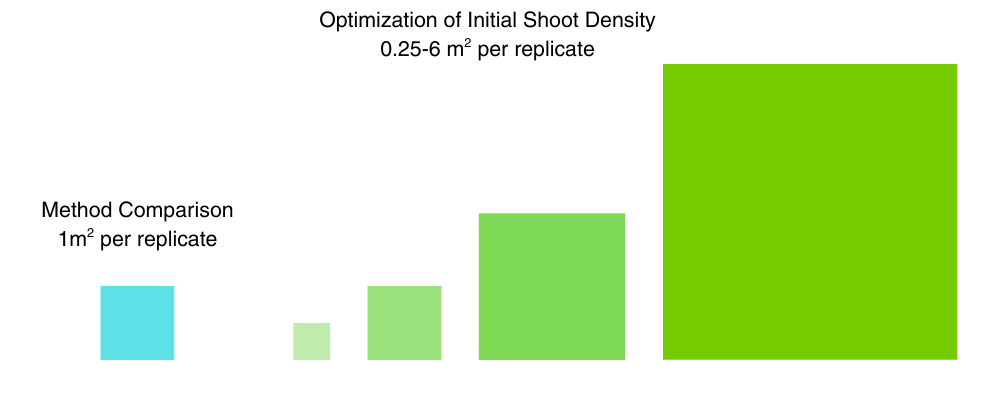
Scale of replicates
1 meter squared per replicate when comparing methods
0.25-6 meters squared when optimising initial shoot density for method most suitable and scalable