Oyster Reef Restoration, France Case Study
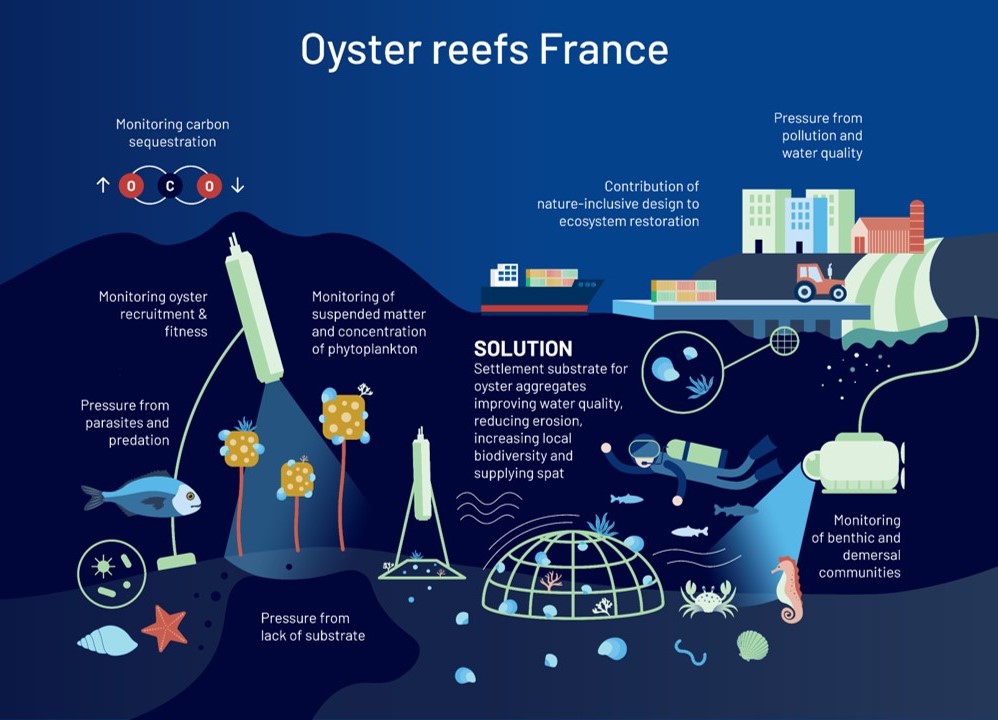
Case Study Components




Introduction to the site
Location: 48. 2020 N, 2.9326 W
Observed ecosystem changes
Loss of Ostrea edulis oyster reef beds
CLIMAREST Objectives
Restore native oyster beds and populations
Features of Brittany, France
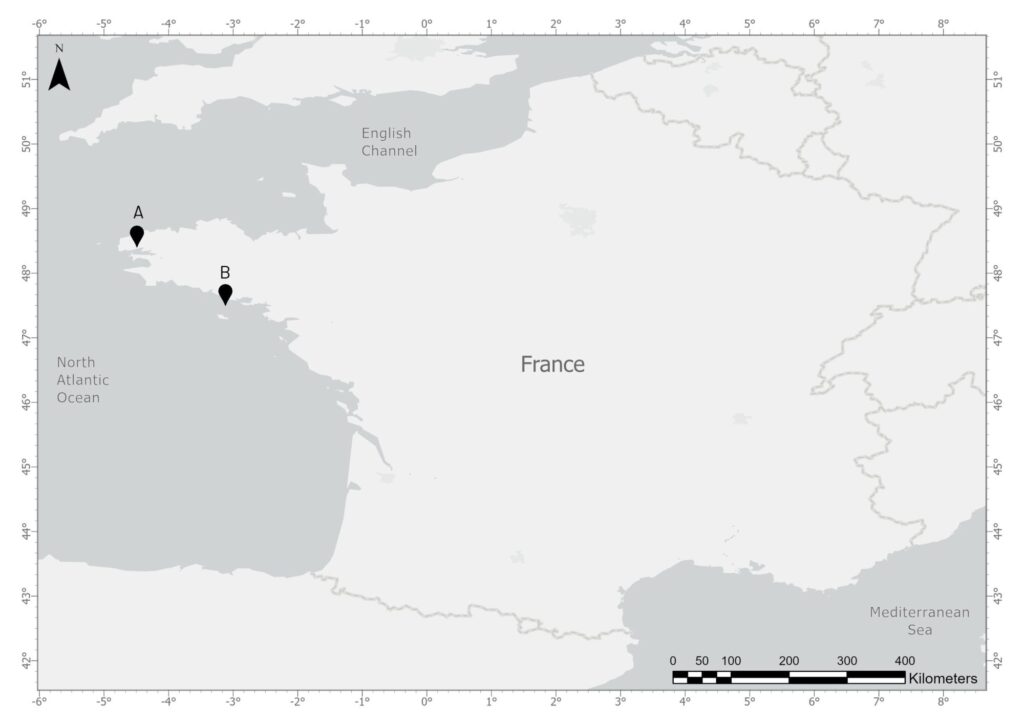
Areas of restoration occurred in the Bay of Brest and the Bay of Quiberon
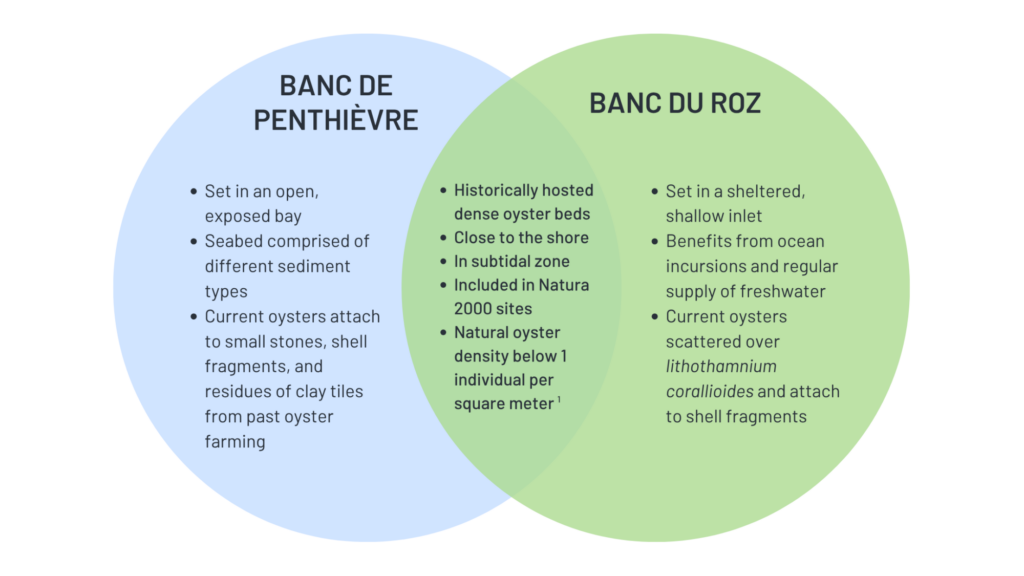
Area has environmental conditions favoring natural reproduction of Ostrea edulis
Strong restoration history in the area
Map indicating the two restoration sites
Driving Factors and Motivations
The restoration of oyster beds in Brittany, France is driven by a variety of concerns, including:
- economic significance of the species through aquaculture and the need to maintain resilient sources of oyster spat
- the lack of natural recovery despite favorable conditions
- heritage value and cultural significance of the species
- ecosystem services from restoration providing benefits towards more resilient coastal communities

Assessment Phase
Key Considerations for Site Selection
Labelled priority areas due to ecological and economic significance
Bay of Quiberon is France’s hotspot for Ostrea edulis reproduction and supplies 95% of French production of flat oyster
Bay of Brest hosts one of Europe's most active living labs for native oyster restoration

Planning and Design Phase
Primary Objective: Contribute to the safeguarding and possible restoration of Ostrea edulis and its reef habitat
Permits
Bay of Quiberon - Marine plot permits
- Managed by regional representative committee of shellfish farmers
- Leased to committee by local state authorities to sustainably manage the specific zone
- CLIMAREST signed partnership agreement with committee to carry out restoration
Bay of Quiberon - Authorization from local Natura 2000 site
- Managing institution of the local Natura 2000 site needed to authorize restoration actions
Bay of Quiberon - State Authorities , Navigation safety
- Individual signalisation with specific marker buoys needed for each equipment item deployed on seabed
Bay of Brest - Plot already had required permits through CLIMAREST partner Ifremer
- Ifremer already working closely with French Office for Biodiversity and local public and professional institutions on research of Ostrea edulis
Relevant EU Regulations
EU Nature Restoration Law
- Sets legally binding targets for restoration of degraded ecosystems
- Member States are required to restore at least 20% of EU land and sea areas by 2030
Habitats Directive (92/43/EEC)
- Requires strict protection and conservation measures for Natura 2000 sites
Marine Strategy Framework Directive (2008/56/EC)
- Mandates achieving Good Environmental Status (GES) of marine waters
- Seagrass meadows serve as a key indicator of ecological quality
Developing Project Protocols
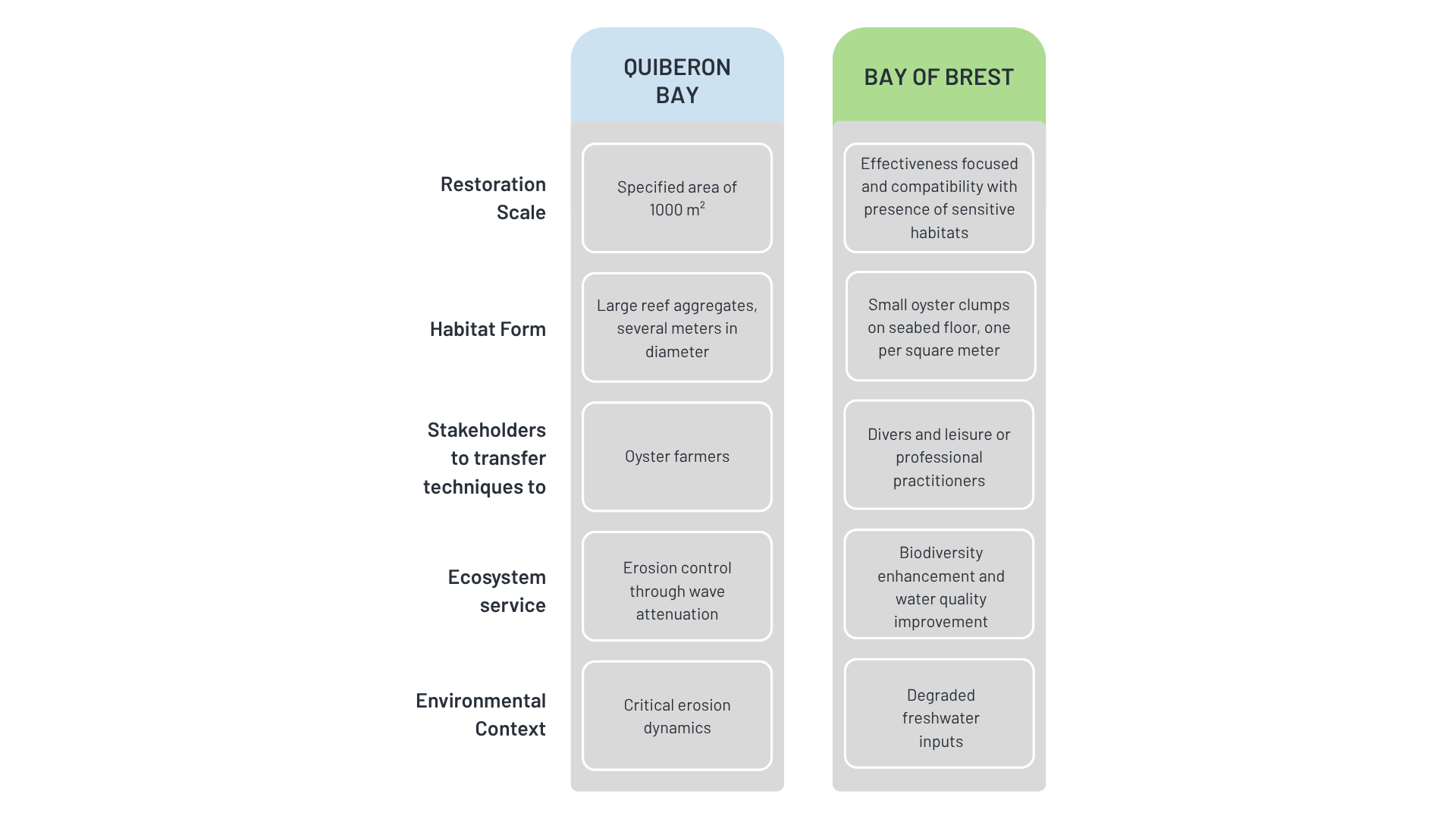

Implementation Phase
Overarching Goal: To deploy substrate that enhances the local settlements of naturally occuring larvae and initiate the formation of native oyster biogenic reefs
Implementation Process
End of May: Monitor reproductive activity of local adult oysters
- Fished out adult oysters to observe
- Water samples taken
- Oyster larvae counted
Compare reproductive data to previous years
- Helps anticipate larval peak
- Larval peak lasts only 2 weeks
- Substrate must be deployed during larval peak
Deploy substrate on seabed during larval peak
- Design and materials of substrate varies site to site
Divers periodically remove predators
Quiberon Bay Deployment Methods
Large steel domes
- 2.5 meters in diameter
- 0.7 meters tall
Coating steel with lime prior to deployment lead to significant gain in oyster larvae colonisation
Bay of Brest Deployment Methods
Small cubes of biobased mortar fixed on small wooden sticks
- Cubes approximately 10 centimeters in diameter
Wooden sticks planted in the seabed
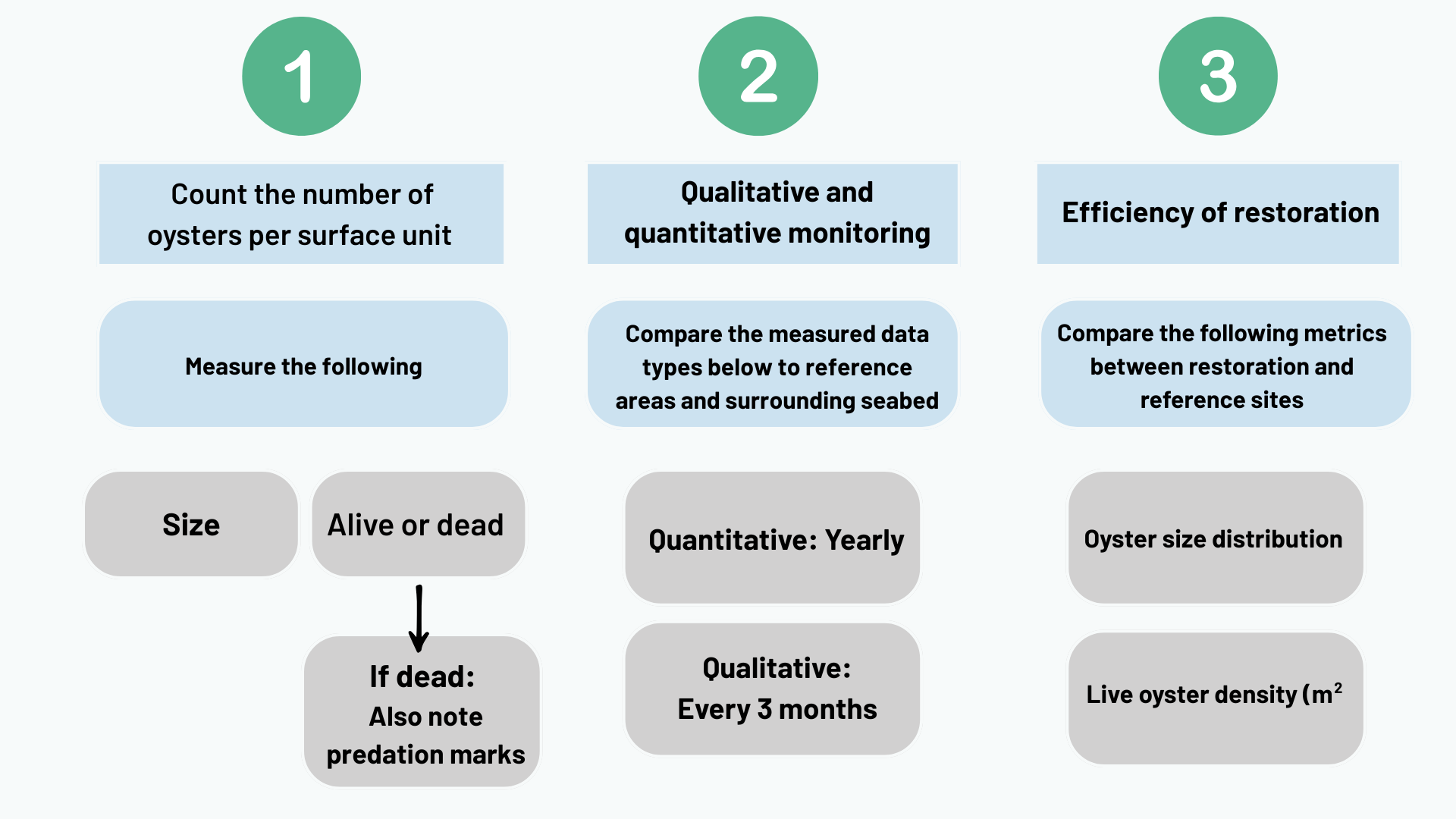
Monitoring and Data Collection Process
Ecological indicators measured
Biodiversity
Identifying species associated to oyster aggregates
Water filtration
Measurement of chlorophyll concentrations upstream and downstream of a reef
Sedimentation
Observing sediment accumulation and/or erosion around the substrates
Carbon fluxes
Carbon content in underlying sediments and dissolved carbon concentration in the water column