Aquaculture Impact Mitigation and Octopus Reintroduction, Croatia Case Study
Case Study Components



Introduction to the Site
Location: 43.2600 N, 16.6500 E
Observed ecosystem changes
Degradation of soft-bottom benthic habitats caused by long-term aquaculture pressures
CLIMAREST Objectives
Restore benthic habitats and strengthen resilience of Octopus vulgaris
Features of the area near Brač Island
Characterized by soft sedimentary seabeds beneath and adjacent to aquaculture cages
Habitats with reduced environmental heterogeneity due to organic enrichment from fish farming
Located in an oligotrophic area with limited capacity to assimilate organic matter, resulting in benthic habitat degradation
Map indicating the location near Brač Island, the location of the replication site.
Driving Factors and Motivations
The project was driven by the need to mitigate ecological impacts of marine aquaculture on benthic ecosystems, particularly the accumulation of organic matter beneath fish farms. Additionally, the common octopus (Octopus vulgaris), overfished in much of the Adriatic Sea, required support through habitat enhancement.
Aims of restoration efforts
- improve benthic habitat complexity
- strengthen octopus resilience
- transfer knowledge to Croatian stakeholders on artificial reef design, monitoring, and telemetry tagging

Assessment Phase
Key Factors Considered for Site Assessment
Historical records of soft sedimentary seabeds adjacent to aquaculture cages
Evidence of long-term organic enrichment from fish farming
Reduced habitat diversity and signs of benthic degradation

Planning and Design Phase
Primary Objective: Contribute to restoring benthic habitats and enhancing Octopus vulgaris resilience near Brač Island
Croatia Permits
No formal permits required, as the project took place within an existing aquaculture concession near Brač Island
- Agreement directly reached with the aquaculture operator, granting access and permission to deploy the artificial reefs and conduct monitoring activities within their concession area
- If restoration practices like this become more frequent, it will be necessary to establish clear permitting procedures to ensure standardization, transparency, and broader applicability
Relevant EU Regulations
EU Nature Restoration Law
- Sets legally binding targets for restoration of degraded ecosystems
- Member States are required to restore at least 20% of EU land and sea areas by 2030
Habitats Directive (92/43/EEC)
- Requires strict protection and conservation measures for Natura 2000 sites
Marine Strategy Framework Directive (2008/56/EC)
- Mandates achieving Good Environmental Status (GES) of marine waters
Developing Project Protocols


Implementation Phase
Implementation Process
Collaboration and site access
- Partnership with aquaculture company holding the concession near Brač Island
- Granted access to deploy artificial reefs and conduct monitoring within concession area
Deployment of artificial reef
- Artificial reef modules designed by the IOF research team to support Octopus vulgaris
- Provide suitable cavities for shelter and habitat
- Transported by boat and deployed beneath fish cages on soft-sediment bottoms using lifting equipment
- Ensures precise placement and stability on seafloor
Monitoring and data collection
- Regular dives and monitoring trips by researchers
- Documentation of reef colonization and environmental conditions
Telemetry tagging
- Supported by University of Vigo research team
- Capture and tag octopus using acoustic telemetry devices
- Follow established protocols for attachment and release
- Deployment of acoustic receiver array
- Tracks movement and habitat use around reef structures
Reference site activities
- Parallel deployment and monitoring at reference sites
- Located away from aquaculture influence
- Enables comparison of ecological responses under aquaculture pressure versus more natural conditions
Monitoring and Data Collection Process
Key ecological indicators
Colonisation of reefs
Site fidelity
Reproductive behaviour
Improvements in benthic habitat heterogeneity


Ongoing Management, Monitoring, and Evaluation Phase
Preliminary results from the replication site
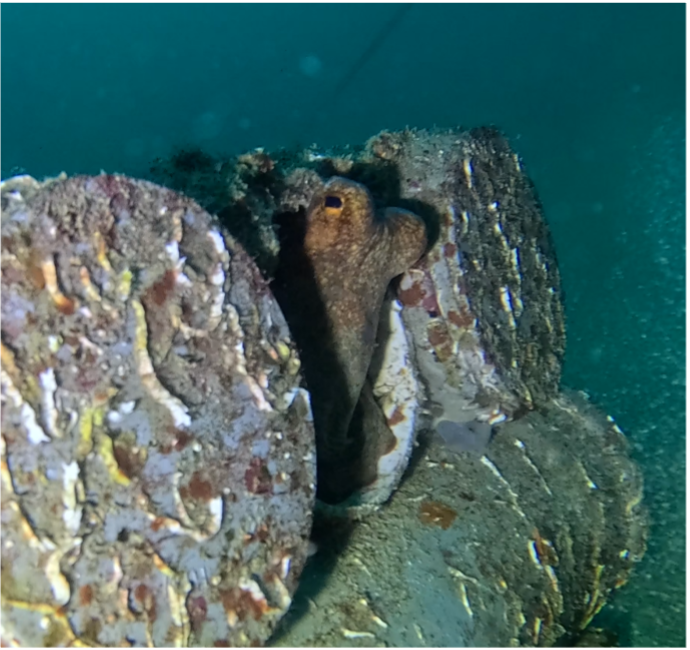
Positive impact of reefs on octopus populations at sites affected by aquaculture
Octopuses are utilising the reefs as their habitat
Reefs are providing benefits to other marine life in the area
Major issues and problems encountered

Sharing and Communication
Aquaculture company
National and international meetings on aquaculture and marine environmental issues
- Example: Meetings organised by the General Fisheries Commission for the Mediterranean