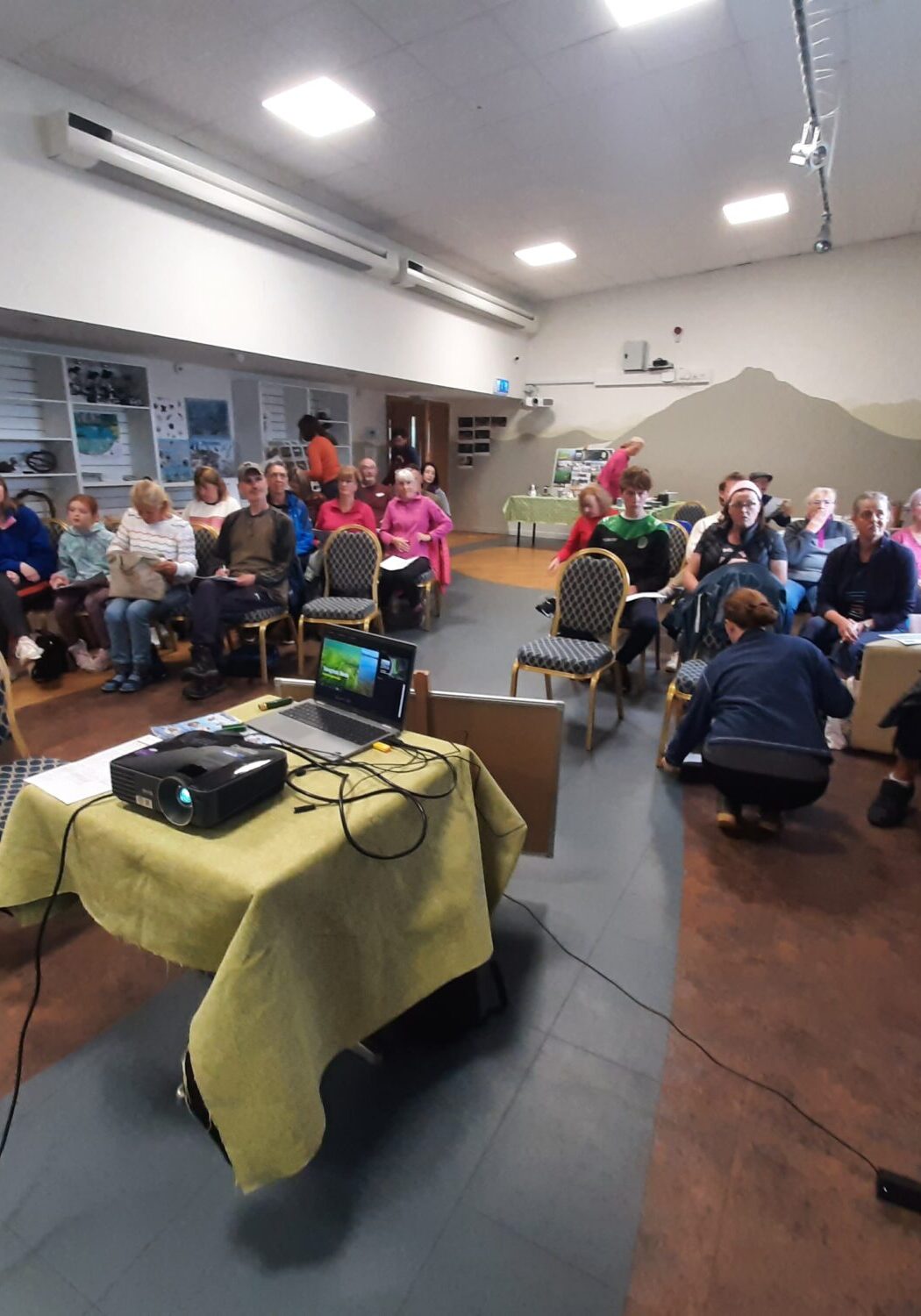
Broad Engagement

The engagement of stakeholders across all restoration components is one of the most essential elements. By engaging stakeholders, the project can increase trust and perceived fairness of decision making, create interventions that are better adapted to the socio-cultural environmental conditions, and secure long-term support for the upkeep and monitoring of the restored site. These are just a few in a large list of reasons to engage stakeholders. The creation of an engagement plan should be prioritized at the beginning of the restoration process, with tangible and realistic goals for collaborating with stakeholders. This section provides steps to begin creating a stakeholder engagement plan.
Integrating Stakeholders into the 5 Components of Ecosystem Restoration
When creating a plan for stakeholder engagement, the approach and contribution of each unique stakeholder should be considered during each of the five components of standard practices of ecosystem restoration, seen in the figure below.
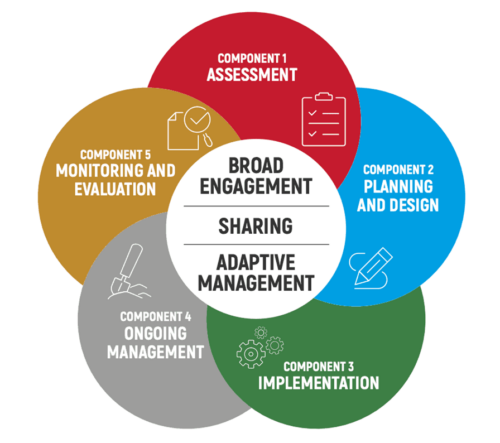
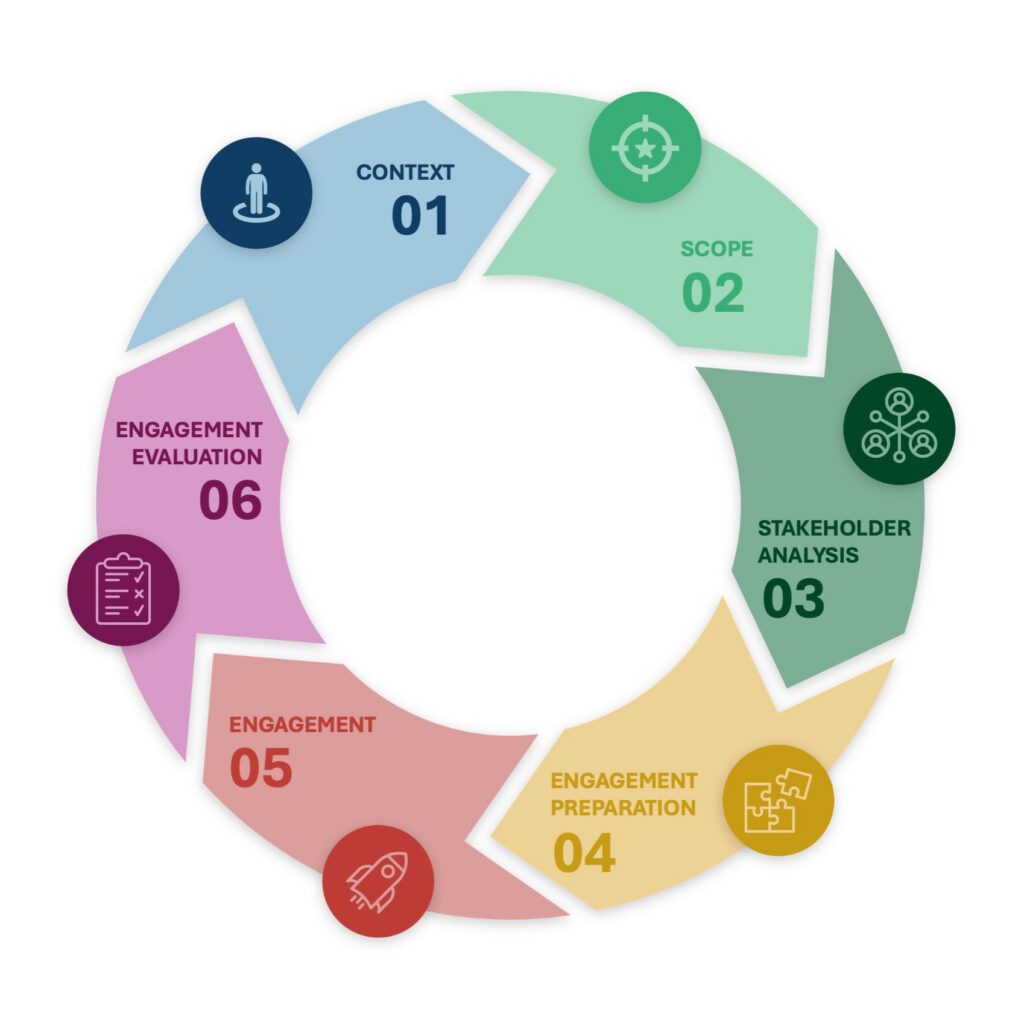
As seen in the figure, broad engagement is a central driver amongst the five components. Following this process theory, broad engagement should be planned and implemented for each stakeholder during each of the five components of the restoration process. All stakeholders must be engaged with during the entire process in ways that are fit for that community. Four steps to planning broad stakeholder engagement are listed below and special attention should be taken to ensure that these steps are integrated within each engagement during each component of restoration.
Six steps to planning and executing engagement
Stakeholder Engagement in Marine and Coastal Restoration
This resource was developed by independent authors and reflects their analyses and recommendations. The document does not currently fully operationalise SER’s International Principles and Standards for Ecological Restoration for inclusive stakeholder engagement, therefore users are encouraged to consult additional guidance and to note that further research and practice is needed to ensure fully inclusive engagement approaches