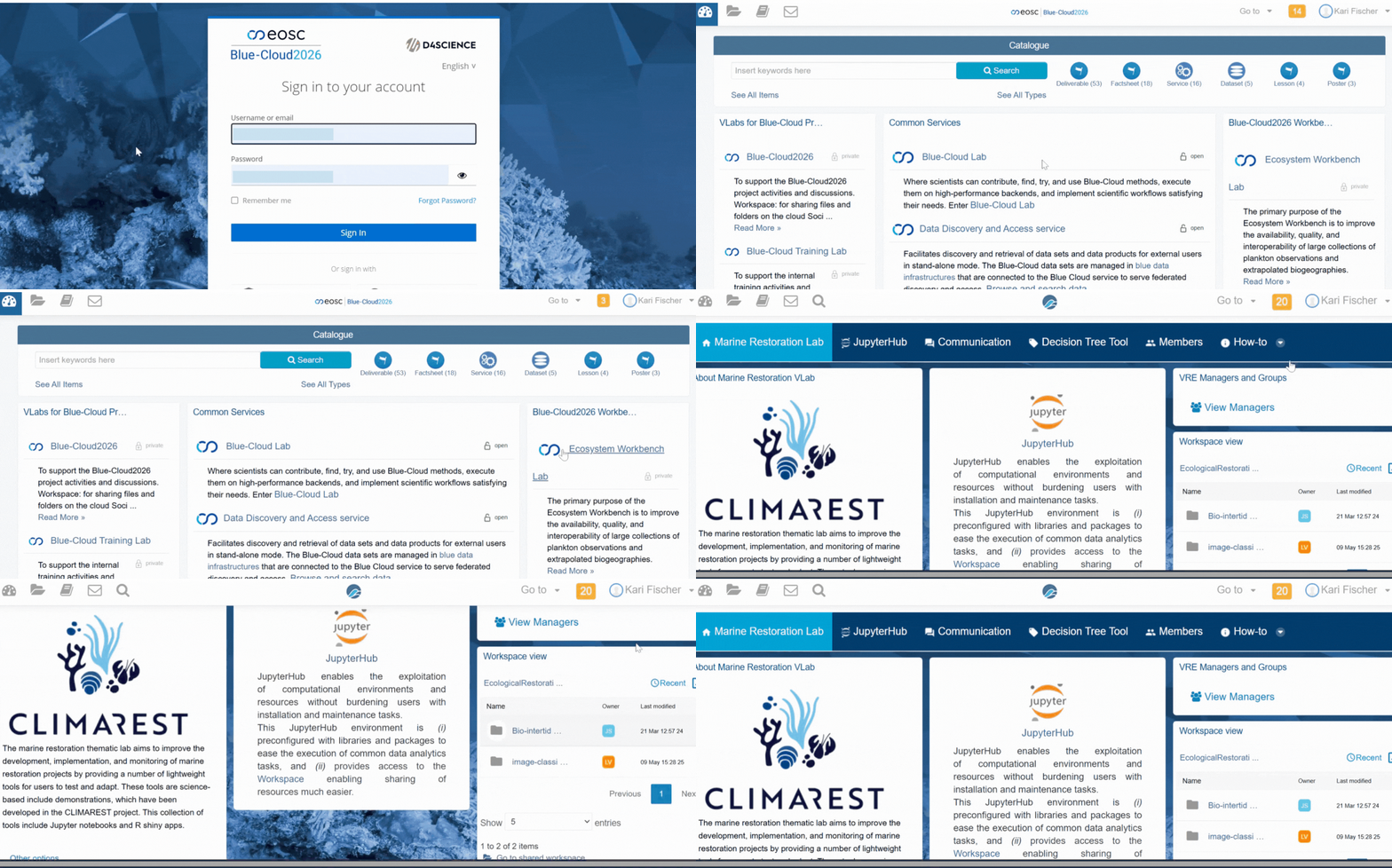
Ireland Digital Twin
The main objective of this tool is to provide practitioners tools for monitoring seagrass meadows in bio-intertidal areas and identifying potential factors that may hinder the establishment of meadows.
Ireland Digital Twin Demonstration
Users are able to experiment with code that allows them to manipulate data through simple interfaces. This data can be used in simple interfaces to interact with the outputs of climate models. They can also perform analyses to monitor seagrass area extent using satellite imagery.
Description of service
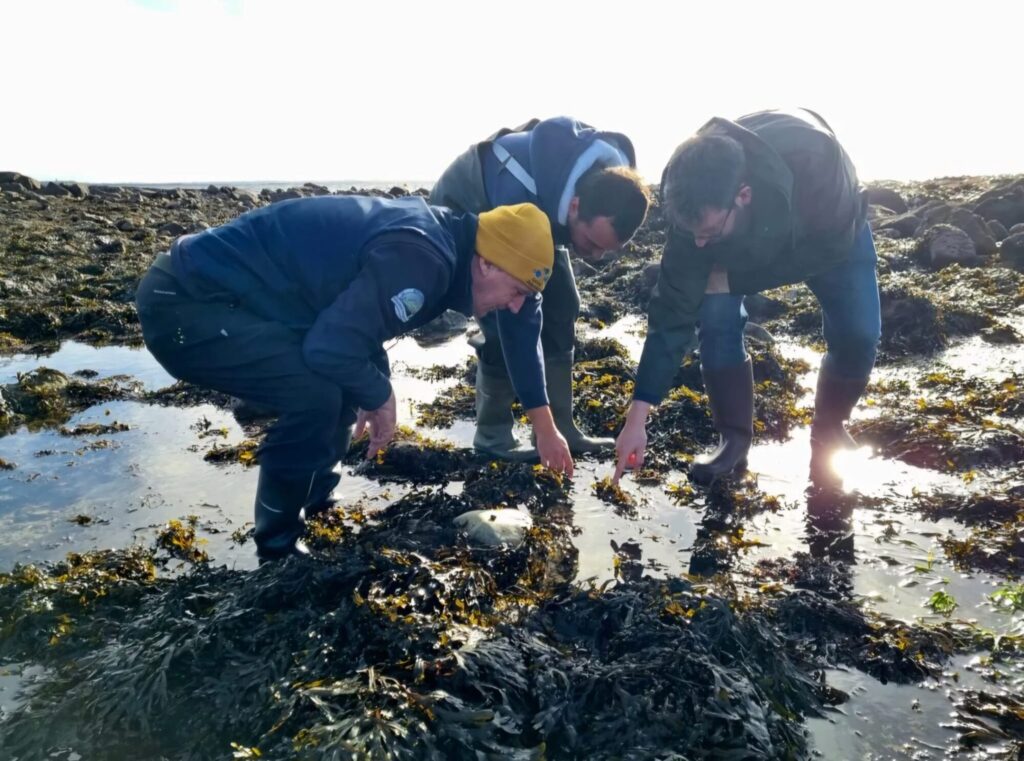
Subject matter experts’ contextual information
- Background information on motivation behind seagrass meadow restoration and identification of factors that drive variation in the success of establishing seagrass meadows.
- Identification of local (i.e., Irish) and European data sources relevant to seagrass restoration.
Tool for monitoring seagrass meadows in bio-intertidal areas using remote sensing
- Demonstration of how to use Sentinel-2 imagery to measure changes to NDVI for monitoring area extent of seagrass meadows (can also be used for measuring macroalgal forests or macrophytobenthos)
- Tool includes filtering of images with cloud or ocean cover obscuring area of interest
- Widgets allow for non-technical users to visualize outcomes of tool.
- Visualization of changes to NDVI in demonstration case in a time series.
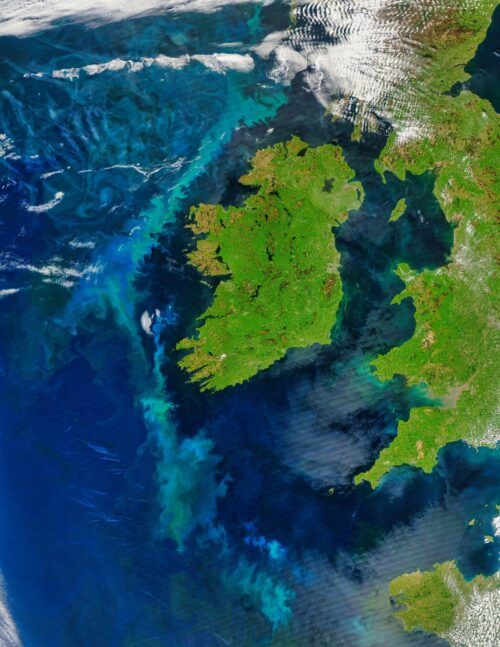
Satellite image of Ireland
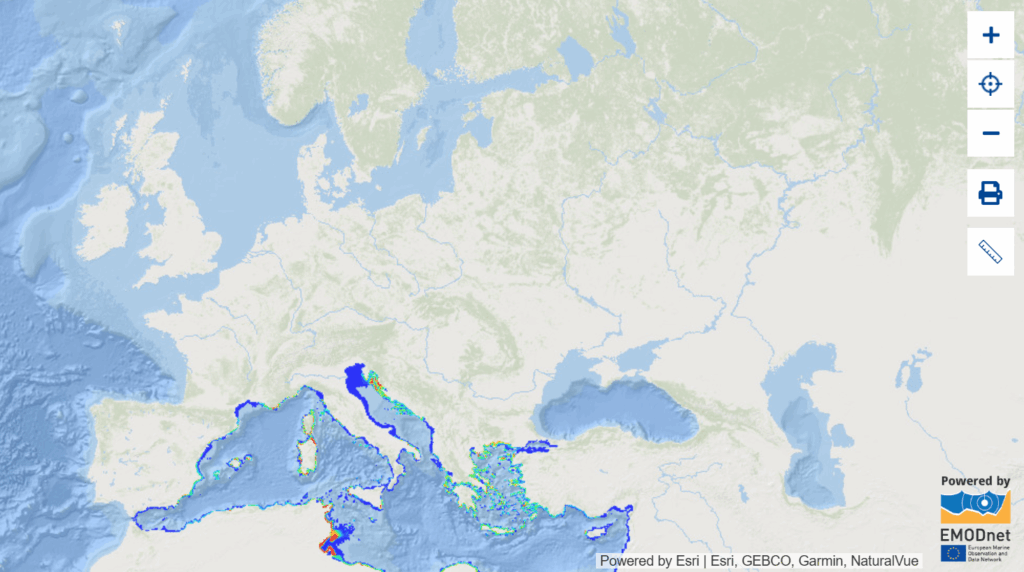
Map of Posidonia oceanica distribution from the European Marine Observation and Data Network
Data visualizations and analyses
- Demonstration of how to access open data sources (e.g., Copernicus) that are relevant to seagrass meadow restoration.
- Time-series of sea surface height with descriptive documentation to help users visualize similar data for their region of interest.
- Visualizations of data such as point sources of pollution (from EMODnet Human Activities) in interactive maps.
Model outputs and interactive visualizations
- The user can interact with outputs from ocean models for geospatially explicit estimates of biogeophysical factors in widgets
- Widgets allow for interaction with observations of sea surface temperature and “what-if” future climate scenarios for sea surface temperatures for the waters surrounding Ireland (forecasting).