Communication and Knowledge Sharing

Black White Grey Round Monogram Typography Logo (8)

Sharing is a versatile component, as its role changes and adapts in each of the five components. Sharing in the context of restoration can appear in a variety of ways, including information and benefit sharing. This sharing of knowledge is required across a range of individuals to make restoration successful, including policymakers, the public, other practitioners, and beyond 1. One of the aspects that links them together is their shared goal of developing ocean literacy, which is an individual’s understanding of the ocean’s influence on individuals as well as an individual’s influence on the ocean 2. Sharing is critical to restoration projects’ current and future successes.

Benefit Sharing

Ensures equitable distribution

Should be transparently shared with stakeholders and community members

Shows how positive outcomes are impacting individuals and organizations

Information Sharing

Idea that all information around the project should be shared with stakeholders

Examples of what to share: Decisions, data, methods, etc.

Examples of when to share: before, throughout, at the end
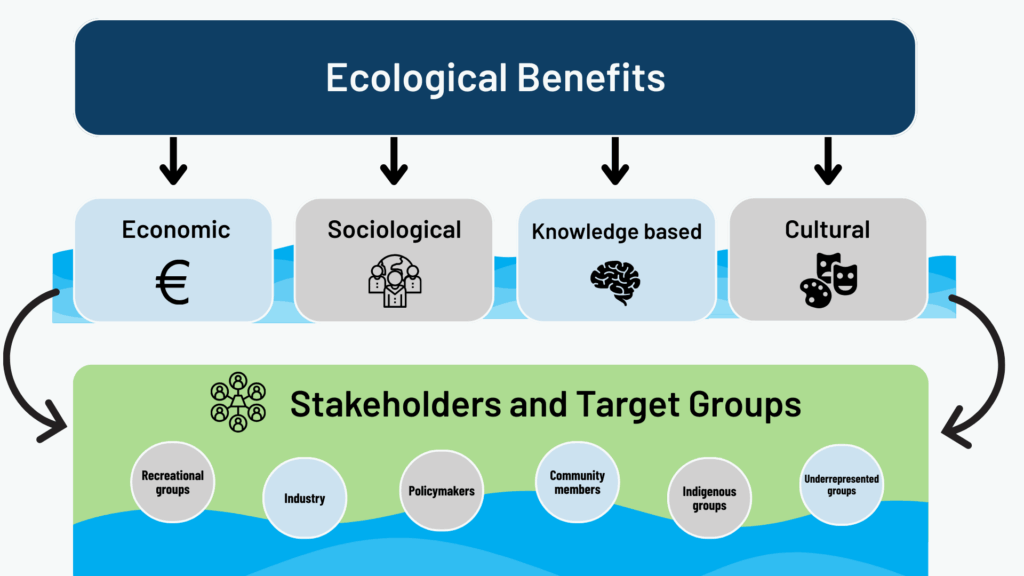
Figuring show that all benefits from ecological restoration should be shared amongst a wide variety of stakeholders

Results of benefit and information sharing

Provides clear understanding on distribution of outcomes

Ensures longevity of the project

Makes stakeholders feel valued

Communicating your Project

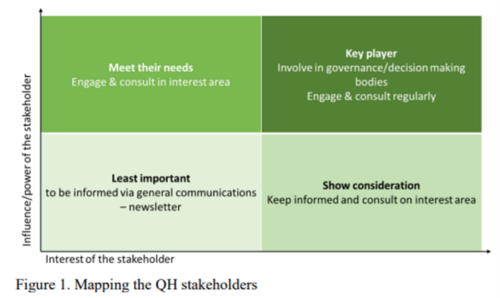
To successfully engage stakeholders, target groups, and community members in information sharing, it is critical that projects are communicated effectively. It is important to commit to proper planning and consideration of your communication goals and how your message and tactics change with different stakeholders.
Policymakers and selling restoration

Message dissemination to local, sub-national, and national policymakers is distinct from other types of communication, considering their support may be crucial for multiple facets of the project, such as funding, upkeep, or project legitimacy. Steps 1-3 should follow the same path as with other stakeholders, but disseminating the message to policymakers requires specially tailored approaches.

General guidelines to consider when communicating with policymakers
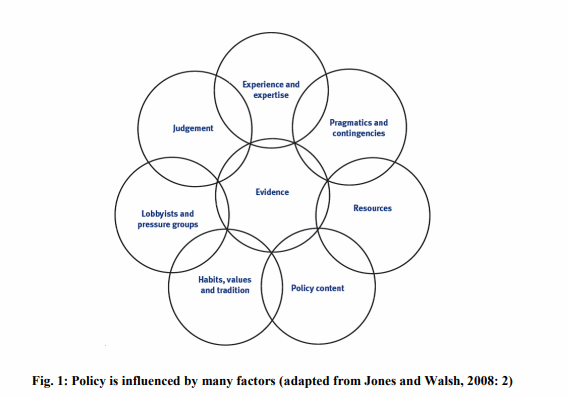
Figure to visualize the varying factors that contribute to policymakers decisions. Reprinted from “EPA Resource Kit: Bridging the Gap Between Science and Policy,” by A. Davies and J.Rourke, 2014, https://www.epa.ie/publications/research/communicating-research/BRIDGE_Good_Practice_Guide.pdf. Copyright 2014 by Environmental Protection Agency.

Factors of policymaking

Remember that policymaking is influenced by many factors, and scientific advice is just one piece of the puzzle 7. The figure to the left shows the many overlapping factors that policymakers will take into consideration when creating legislation and policies.

The policymaking cycle

Since policymaking is cyclical, it is possible to engage at every point of the cycle to communicate relevant information 8. The most opportune times to influence policymakers will be in an informal capacity at the idea gathering stage or in a formal capacity as green and white papers are being prepared by ministries or relevant government institutions 7.
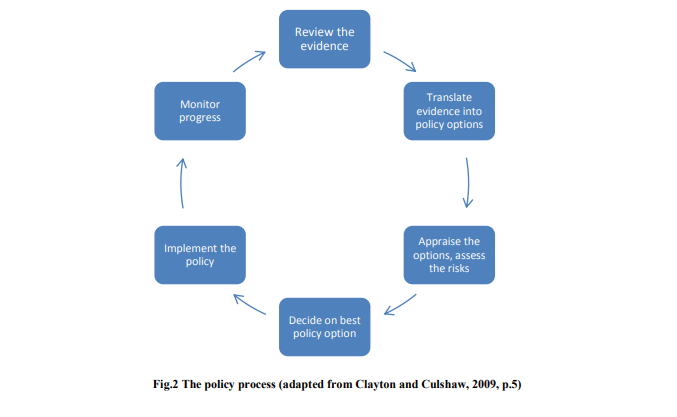
Figure to visualize the steps of the policy process. Reprinted from “EPA Resource Kit: Bridging the Gap Between Science and Policy,” by A. Davies and J.Rourke, 2014, https://www.epa.ie/publications/research/communicating-research/BRIDGE_Good_Practice_Guide.pdf. Copyright 2014 by Environmental Protection Agency.
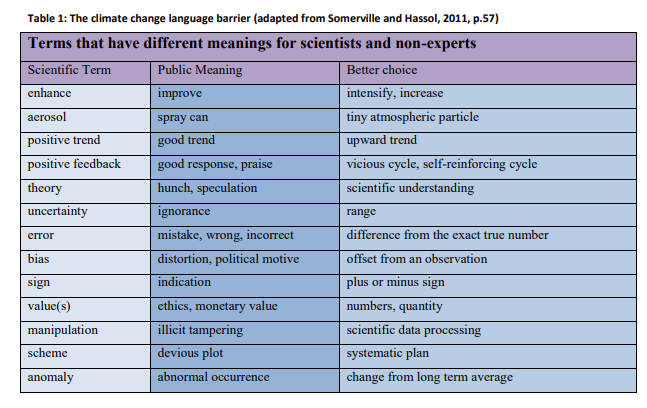
Table to indicate the different interpretations of words in scientific understanding vs. public understanding. Reprinted from “EPA Resource Kit: Bridging the Gap Between Science and Policy,” by A. Davies and J.Rourke, 2014, https://www.epa.ie/publications/research/communicating-research/BRIDGE_Good_Practice_Guide.pdf. Copyright 2014 by Environmental Protection Agency.

Four key components for good science-policy communication
Poster Africa Nunez (1)
20240606_125126
Macaronight_2024 (5)

References

1. Ellis S (2025) Stakeholder roles and responsibilities: A comprehensive guide. The Knowledge Academy. https://www.theknowledgeacademy.com/blog/stakeholder-roles-and-responsibilities/
2. Intergovernmental Oceanographic Commission. (n.d.). Ocean literacy. UNESCO. https://www.ioc.unesco.org/en/ocean-literacy
3. FAO, SER, IUCN CEM (2023) Standards of practice to guide ecosystem restoration. A contribution to the
United Nations Decade on Ecosystem Restoration. Summary report. https://doi.org/10.4060/cc5223en
4. Jensen E, Karalija E, Mordan C, Sahan K, Chaves Chaparro J (2020) Stakeholder engagement guidelines (GRRIP Deliverable 4.2). GRRIP. https://grrip.eu/wp-content/uploads/2021/08/D4.2.pdf
5. Jeffery N (2009) Stakeholder engagement: A road map to meaningful engagement (No. 2 in the Doughty Centre "How to do Corporate Responsibility" series). Cranfield University.
6. Appareo kommunikasjon (2017) Kommunikasjonstrappa. 
7. Davies A, Rourke J (2014) BRIDGE: Good practice guide for science-policy communication (EPA Research Report Series No. 132). Environmental Protection Agency, Ireland. https://www.epa.ie/publications/research/communicating-research/BRIDGE_Good_Practice_Guide.pdf
8. Clayton H, Culshaw F (2009) Science to policy: Taking part in the process. Natural Environment Research Council: Swindon.